
by Kevin Pointer Sr.
What’s old is new again. I’m old enough to remember the days when desktop publishing was supposed to change everything—and in a way, it did. The mid-1980s were wild: Apple’s Macintosh, the Apple LaserWriter printer, and Aldus PageMaker dropped like a holy trinity, and suddenly, anyone with a mouse and a printer could call themselves a designer.
The Tools Floodgates Opened:
- Aldus PageMaker coined “desktop publishing.”
- QuarkXPress became the pro standard.
- Ventura Publisher kept PC users busy with manuals.
- Adobe Illustrator and CorelDRAW put real power on every desk.
But here’s the twist then and now: just because you could design didn’t mean you should.
The Ransom Note Effect
Back then and now, most people had no real design training—so they did what came naturally. They used every font, every color, every size, every clip art they could find. The result? Pages that looked like ransom notes—chaotic, confusing, desperate for attention. That’s what early Desktop Publishing (DTP) layouts started to resemble.
What I have called the democratization of design tools led to a visual land rush. But it also revealed a hard truth: tools don’t replace taste, training, or discipline. As the dust settled, real designers started pushing back. They championed timeless principles—white space, limited typefaces, grids, and hierarchy. Less became more, and the best work started to breathe again.
“No longer the exclusive domain of professionals, graphic design today is accessible to all,” writes Cath Caldwell in Graphic Design for Everyone. But that’s the paradox: when everyone can design, the real value lies in knowing how to design well.
Fast Forward: Branding Democratization, AI, & “Canva” Era
Today, we’re living through another revolution. Canva, Figma, Midjourney, ChatGPT and more seemingly by the week —every tool imaginable is a click away. You can build an entire brand in an hour. But here’s the thing: the same warning from the ‘80s applies. It’s not all about the tools and access—it’s also about the thinking behind them.
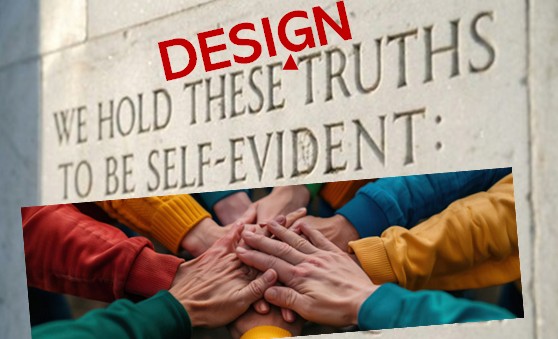
The Truths We Hold
If you’re a brand strategist, visual designer, or creative director, you know this already. But sometimes it’s worth saying out loud:
- Authenticity isn’t optional. Good customers — the kind you want to keep—are allergic to fake, copycat brands. They crave real stories, honest values, and work that reflects who you are. If your honest, informed style or logic can resonate with your clients — then there can be magic!
- Research isn’t just a box to check. The best brands are built on evidence, not guesswork. The best branding dig deep: audience analysis, competitive research, and real-world personas. Strategic and timely adjustments. That’s how you build something that lasts.
- Before colors or fonts comes understanding. Too many firms jump straight to visuals. The best branding start with the “who” and the “why.” Who are we serving? What do they need? What makes us different? What will make them care? If you skip this, you’re just making pretty noise.
Why Audience Personas Matter
I believe that the companies that slow down to define their ideal customers, and—just as crucial—who their brand isn’t for, are the ones that win. Audience personas aren’t fluff. They’re the foundation beneath everything else.
Want proof? When I built KRUSHPOINT Brand Strategy Plan, I mapped out three detailed personas. Each one is rooted in census data, market research, and lived experience. That level of clarity makes every design decision easier—and every brand touchpoint more powerful.
Why Competitive Analysis Isn’t a Chore
Too many folks treat competitive research like a formality. But if you don’t know what your rivals are doing, how do you know what “different” really means?
- What are they doing right?
- Where are they phoning it in?
- What gaps are they leaving open?
Answer those, and you’ll likely never fade into the background.
“I Believe” Isn’t Just a Slogan
The best brands are built on conviction. I believe:
- Everyone has a story to tell. Branding is how you share it.
- Giving back isn’t optional — it’s a duty.
- Empowering others is the real flex.
- You never stop learning, and you never stop teaching.
- The best work comes from partnership, not top-down orders.
(Inspired by Chris Ford’s “Sample Brand Strategy”—a document that’s quietly shaped hundreds of creative shops.)
The New Golden Rule: Less Is Still More
Back in the day, the pros brought order to desktop chaos. Today, the same principle applies, even as a plethora of AI and digital tools explode.
- White space is your friend, not your enemy.
- A handful of fonts beats a circus of them.
- Grids and structure make your message clear.
- A logo is not a brand. Only a small beginning.
Final Thought
If you’re serious about building a brand that outlasts the trends, start with the truths that never go out of style.
- Do your research.
- Know your audience.
- Stand for something.
- Design with discipline, not just with tools, fonts, and colors.
Because while the tech and tools will always change – the need for clarity, authenticity, strategy – and solid, informed design principles, never will.
And. These. Are. The. Timeless Design. Truths. To. Hold. On. To. —– Then and Now.
Sources for further reading:
- Graphic Design for Everyone, Cath Caldwell
- Branding Basics for Small Business (PDF)
- Sample Brand Strategy by Chris Ford (ask for PDF)
- U.S. Census Bureau: Nonemployer Business Characteristics